
The Anglo-Khasi Resistance (1829–1833)
Events Leading to Conflict with the British
The conflict between Tirot Sing and the British did not arise suddenly. It was the result of political pressure, broken assurances, and growing interference in the sovereignty of the Khasi Hills.
Strategy, Battles, and Resistance Movements
Tirot Sing’s resistance against British rule was marked by calculated strategy, decisive engagements, and widespread participation of Khasi warriors and villagers. His movement relied on unity, terrain knowledge, and unwavering resolve.
Guerrilla Warfare Tactics
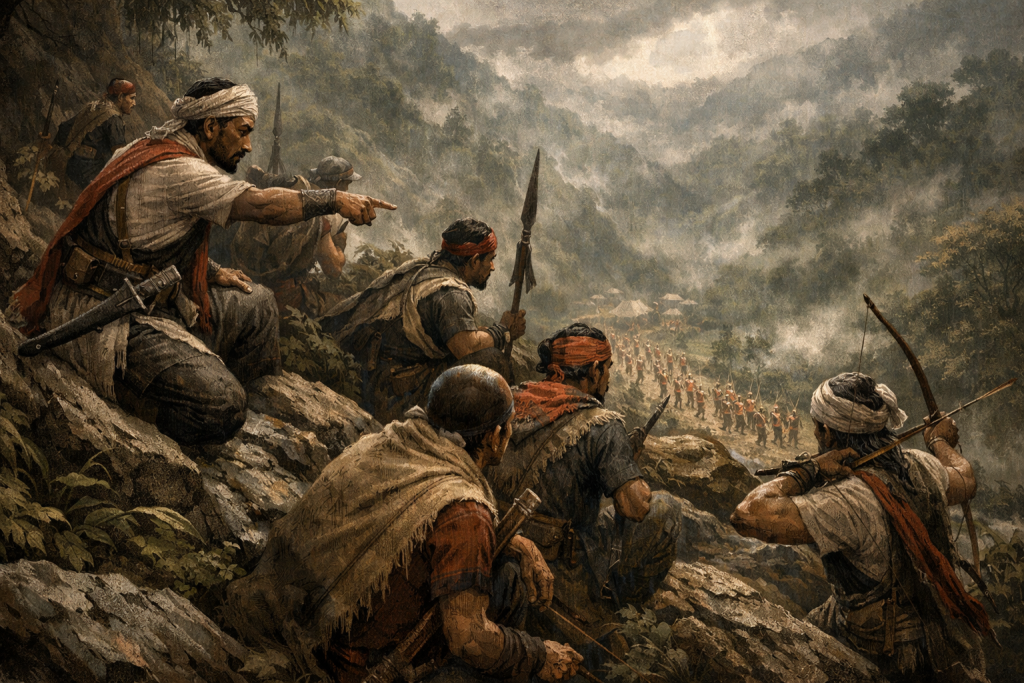
Instead of open-field battles, Tirot Sing adopted guerrilla tactics. Surprise attacks, ambushes, and swift retreats allowed Khasi forces to counter a technologically superior enemy.
Use of Terrain Advantage
Dense forests, hills, and narrow passes of the Khasi region were used strategically. British troops unfamiliar with the terrain faced constant logistical and movement challenges.

Widespread Local Uprisings
Resistance spread beyond Nongkhlaw, with multiple Khasi chiefs and communities joining the struggle to defend their autonomy.
Symbol of Defiance
Tirot Sing emerged as a unifying symbol of resistance, inspiring continued defiance even as British pressure intensified.
Persistence Despite Losses
Despite casualties and dwindling resources, the movement persisted for years, demonstrating extraordinary resilience against colonial power.
Role in Defending Khasi Sovereignty
Tirot Sing played a decisive role in safeguarding the political and cultural independence of the Khasi Hills during a period of increasing colonial pressure. His leadership represented the collective will of the Khasi people to govern themselves without external domination.
By refusing to submit to British administrative control, Tirot Sing asserted the sovereignty of the Khasi states. He emphasized unity among local rulers and mobilized communities to protect territorial boundaries from foreign interference.
Even after facing military setbacks, his continued defiance reinforced the idea that Khasi sovereignty was rooted in tradition, collective responsibility, and deep respect for the land.
🛡️
Protection of Ancestral Land
Defended Khasi territory against unauthorized intrusion and control.
⚖️
Preservation of Customary Law
Upheld indigenous governance systems and traditional authority.
🤝
Unity of the Khasi People
Fostered solidarity among chiefs and communities to resist colonial rule.